The Trap of the "Electric" Days
There are days in hospitality that feel electric. A big conference hits town, a concert sells out the arena, or a sports event shakes up the whole market. Screens light up, prices are tweaked, LOS rules are tested, and group requests suddenly feel like high-stakes negotiations.
Those are the days everyone talks about: the famous compression days.
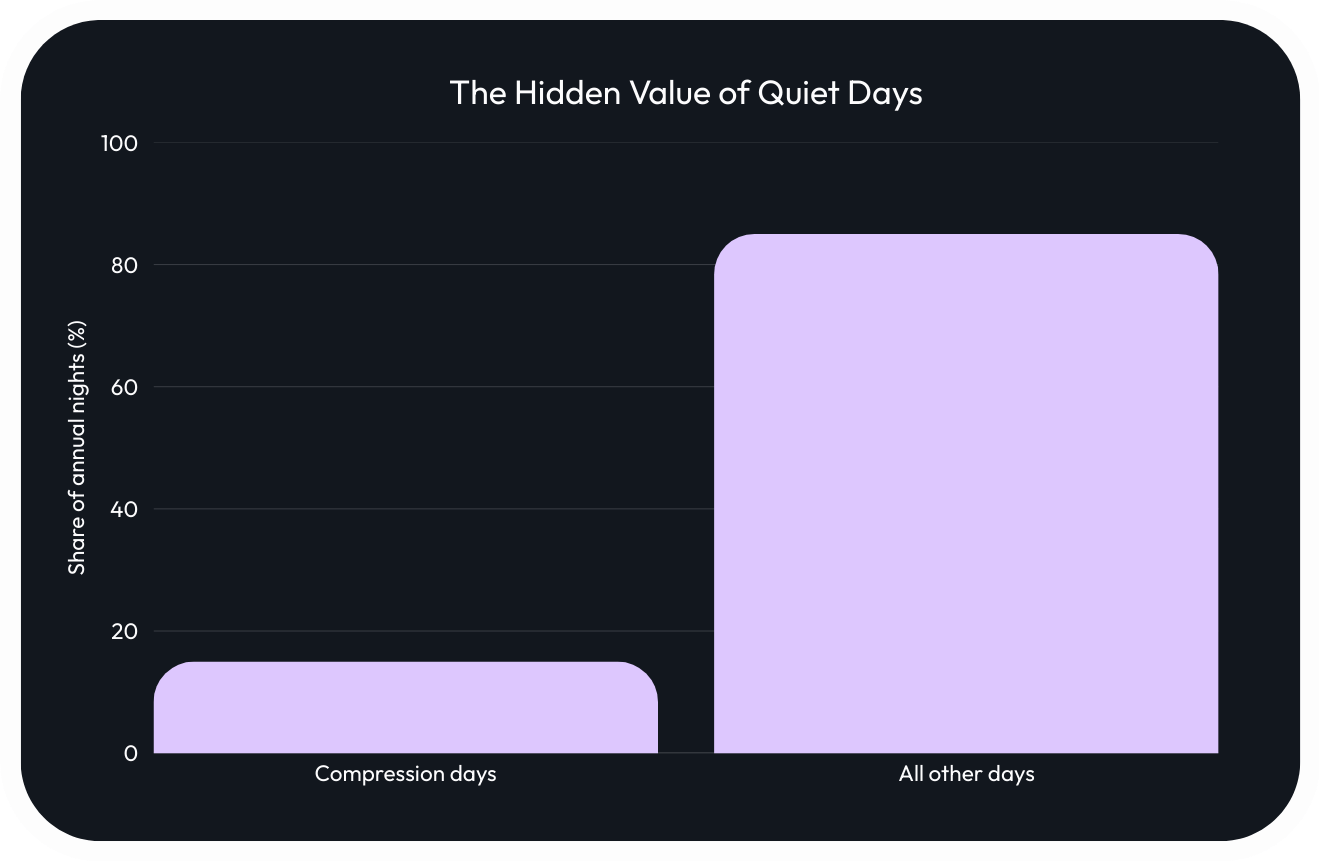
But here's the real truth: While the spotlight shines on these rare peak moments, the rest of the calendar quietly disappears from attention. Most nights aren't dramatic. They don't trigger alerts. They don't demand emergency rate reviews. They simply happen: and that's exactly where most revenue potential slips through the cracks.
A Changing Landscape
Adding to the pressure, the market itself is changing. Across many major cities, there are fewer big events than even a few years ago. Trade fairs shrink, rotate more often, go hybrid, or disappear entirely. Corporate travel reorganises.
Meanwhile, more hotels open every year, increasing competition, especially when demand stays flat. With fewer blockbuster dates to rely on, hotels can no longer depend on "that one crazy week in September" to carry the year.
The Overwhelmed Revenue Team
At the same time, the workload for revenue teams has exploded. A revenue manager who used to run one hotel now handles three, five, or even more. Demand becomes more fragmented. Booking windows shorten. Behaviour changes faster.
Data comes from everywhere, creating a flood of information:
- Comp set rates & reputation scores
- Weather forecasts & social signals
- Website traffic & booking pace
- Events, holidays, and school vacations
- Political unrest, currency fluctuations, and visa regulations
It's impossible to manually monitor it all. So what happens? Teams over-focus on the loudest days, because those are the ones they have time to manage.
The Silent Majority
Consequently, the silent majority of the calendar receives far less attention:
- A soft Tuesday goes unnoticed.
- A shoulder night stays underpriced.
- A small gap repeats itself again, and again, and again across hundreds of dates.
How AI Changes the Game
This is where AI turns the whole game around. Modern, data-driven systems don't just react when markets scream. They quietly scan, compare, forecast, and prioritise every single day. Even the "boring" ones.
Patterns are picked up before humans see them. Risks are flagged early. Opportunities are surfaced automatically based on transparent external factors. Prices move with demand instead of chasing it.
From Chaos to Strategy
Group decisions become profit-based rather than instinct-driven. And, crucially, the human role gets stronger, not weaker. Commercial teams finally gain time for strategy, creativity, communication, and judgement instead of spreadsheet detective work.
The "data dilemma" doesn't vanish; it transforms. Chaos becomes clarity. Three heroic peak weeks evolve into 52 consistent ones.
Revenue stops depending on luck, timing, or a handful of noisy dates. Because in today's market, with fewer big events, more hotels, and demand spread thinner, success is no longer about winning three great nights. It's about unlocking hidden value on the hundreds of nights nobody talks about.
Modern revenue management begins where attention moves beyond the obvious peaks and into the quiet days where the real value lies.